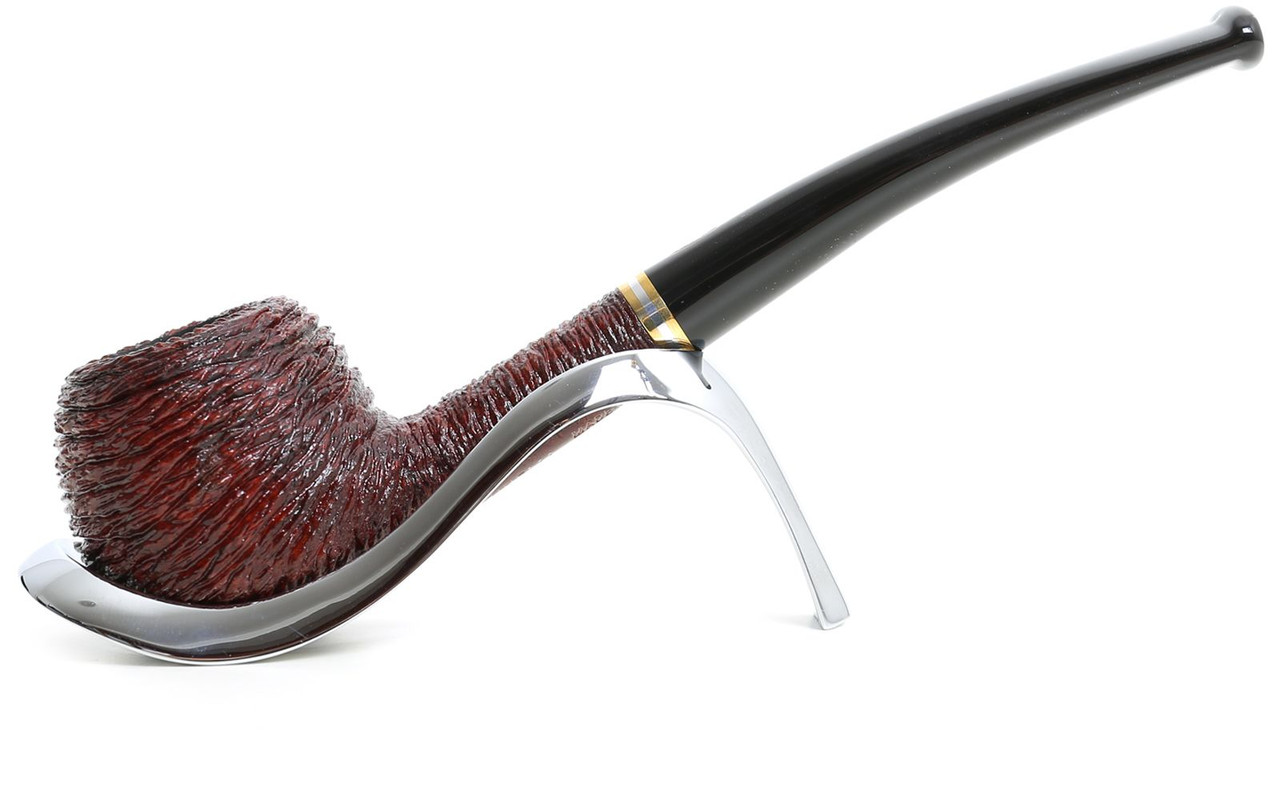
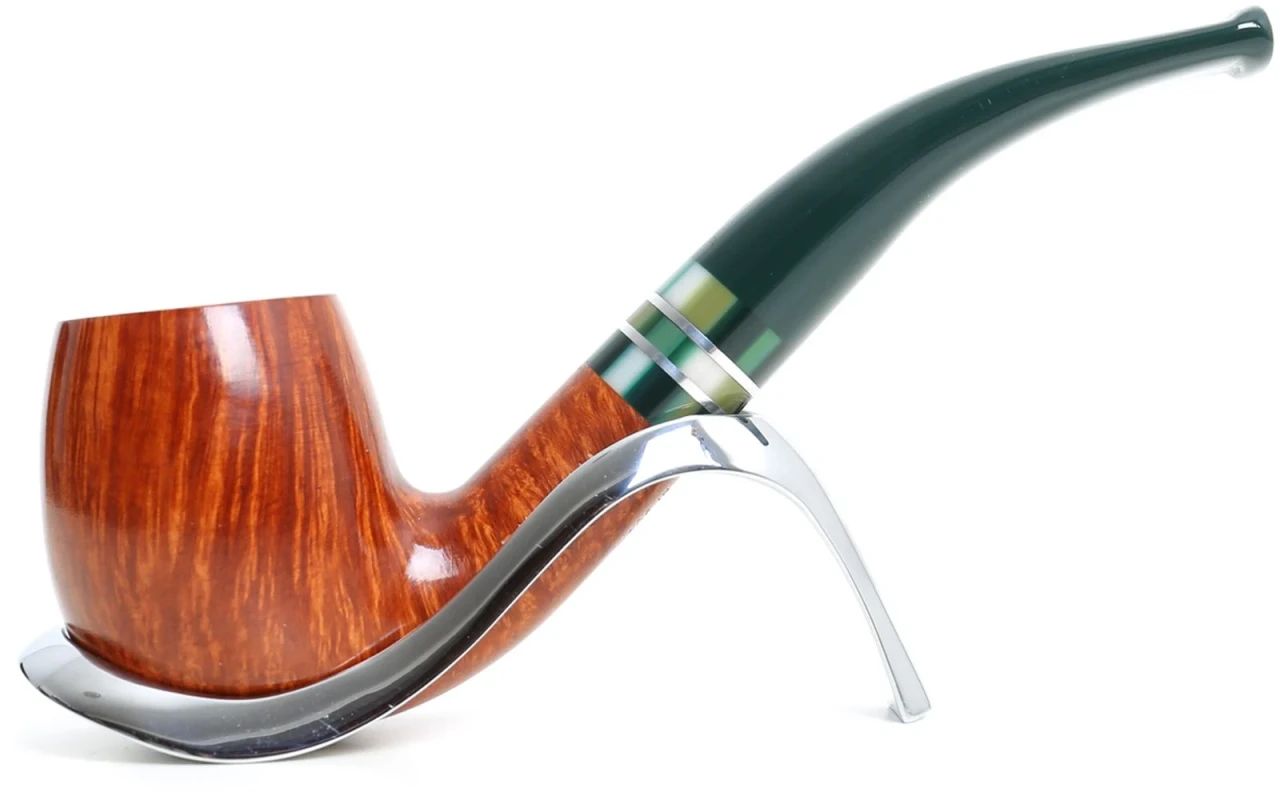
To restore briar with aesthetic defects, a careful sanding is performed to remove surface imperfections, followed by treatment with specific oils or waxes that enhance the grain and protect the wood. In some cases, fillers or colorants are used to even out the appearance without compromising the structure.
How is briar with aesthetic defects restored for a pipe? Deep dive
Restoring briar with aesthetic defects for pipe making requires attention and skill. First, precise sanding is carried out to eliminate surface imperfections such as scratches, dents, or small cracks, while preserving the wood’s natural grain. Then, natural oils or briar-specific waxes are applied to nourish the wood, highlight the grain, and protect the pipe from moisture and wear. If defects are more pronounced, special wood fillers can be carefully applied to even out the surface without altering the briar’s structure. Occasionally, light color treatments may be used to mask discolorations or stains, maintaining a natural and refined appearance. This process not only improves the aesthetic of the briar but also enhances its durability, resulting in a visually pleasing and functional pipe even when starting from initially imperfect material.